The origin of our history
In the soul of Bodega Familia Rubino, the connection with the land is a constant dialogue. A silent conversation between the vine, the soil, and time that translates into wines capable of expressing the uniqueness of each Mendoza terroir.
Our vineyards, deeply rooted in Mendoza, are the stage where the history of five generations dedicated to wine is written. A legacy that is renewed at every sunrise and every harvest, keeping alive the essence of an Argentine family winery.
We believe that wine does not begin in the winery. It begins much earlier: in the land, in the patient observation of the vineyard, and in the respect for the vine’s natural rhythms.
Our vineyards develop in Mendoza, at the foot of the Andes Mountains, one of the most recognized wine regions in the world. The dry climate, high solar radiation, and marked thermal amplitude between day and night favor a slow and balanced ripening of the grapes.
Water, from Andean snowmelt, is an essential and carefully managed resource. Its purity and control allow the vineyard to be sustained under demanding natural conditions, achieving healthy and concentrated grapes.
Each estate was selected after a meticulous study of the soil, altitude, and climate. Nothing is accidental: every decision seeks for the vine to express its maximum potential.

Three wine regions, multiple personalities
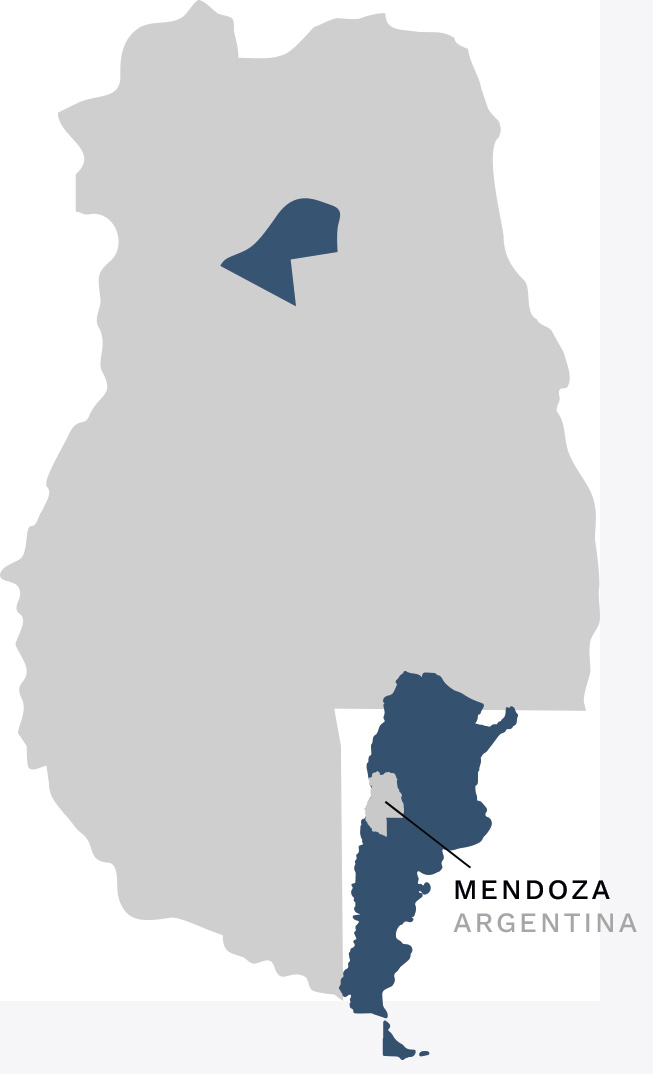
Rivadavia
Where it all began
Finca Rivadavia, located at 667 masl, is characterized by its sandy loam soils with very good water retention, a key condition for the vegetative balance of the vine in a dry climate zone.
Here we cultivate Malbec, Cabernet Sauvignon, Sangiovese, Ancellotta, and Torrontés, under a trellis training system, with a density of 7,000 plants per hectare, favoring competition between plants and greater concentration in the grape. The result is wines of great character, intensity, and varietal expression.
Maipú
Tradition, strength, and balance
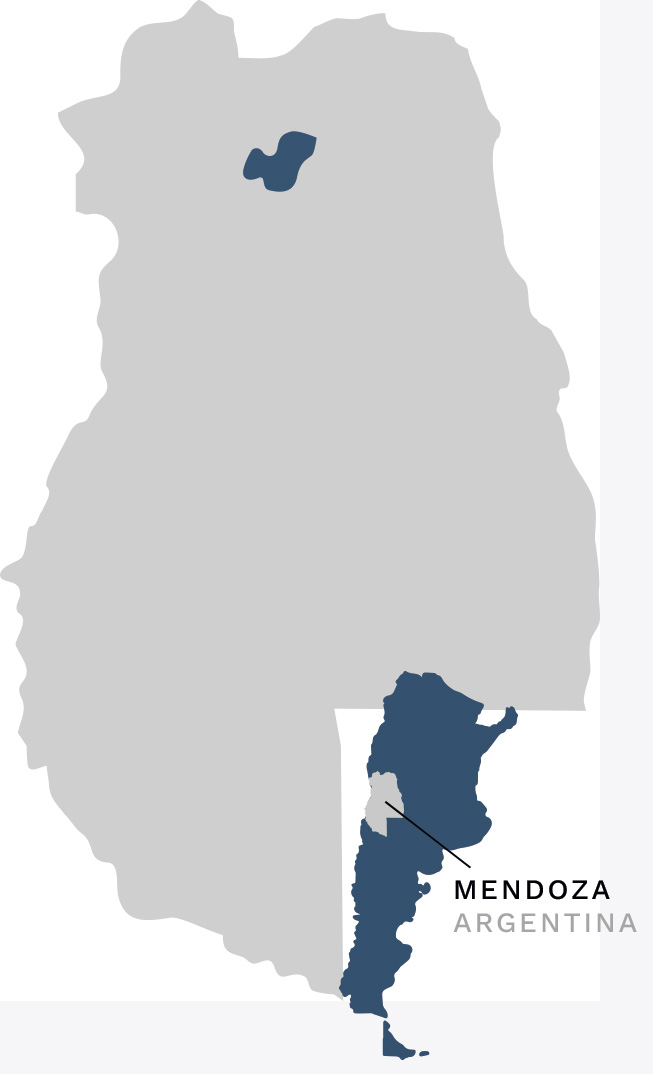
In this historic region of Mendoza, Finca Coquimbito and Finca Paraíso are found, two complementary expressions of the Maipú terroir.
Finca Coquimbito, at 800 masl, features sandy loam soils that offer excellent drainage and, at the same time, adequate moisture and nutrient retention. Here Malbec and Cabernet Sauvignon are cultivated, trained on trellises with a density of 5,000 plants per hectare, achieving structured and balanced wines.
Finca Paraíso, located at 750 masl, sits on deep sandy loam soils that allow for great root development. On this estate we cultivate Cabernet Sauvignon, Malbec, Viognier, and Semillon, also on a trellis system and with 5,000 plants per hectare, giving rise to wines of elegance, breadth, and expressive profile.
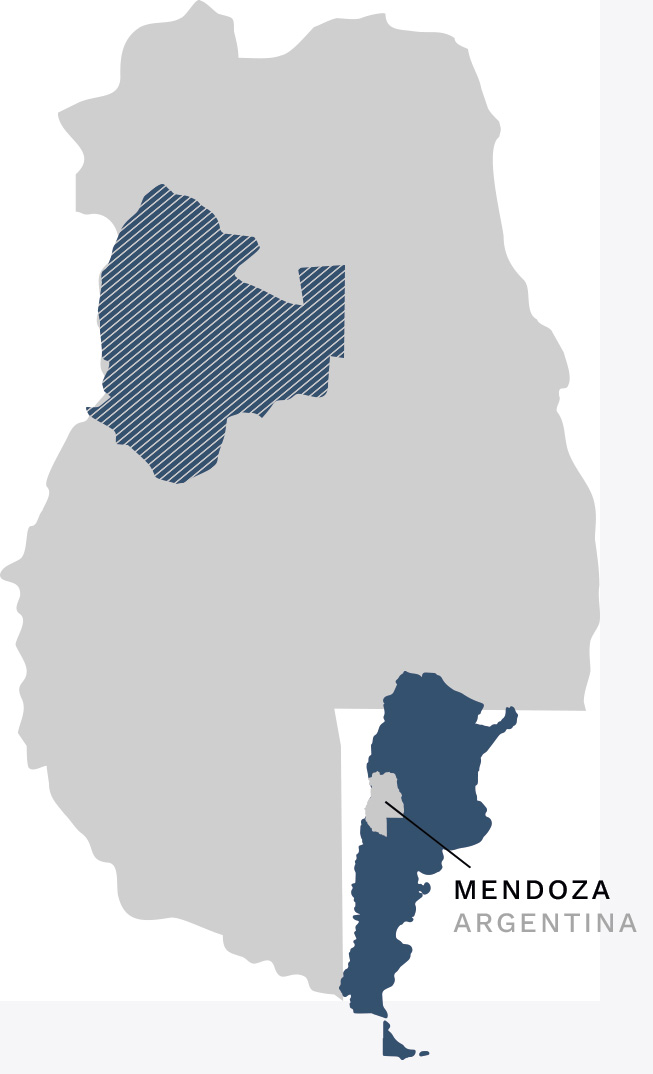
Uco Valley
Altitude that redefines terroir
Finca Peral, in the heart of the Uco Valley, is located at 1,204 masl. Its sandy loam soils with the presence of gravel, pebbles, and calcareous cover provide freshness, natural tension, and complexity to the wines.
Here we cultivate Malbec, Cabernet Sauvignon, Cabernet Franc, Chardonnay, Sauvignon Blanc, and Pinot Gris, under a trellis training system and with a density of 5,000 plants per hectare. The combination of altitude, soil, and climate results in precise, elegant wines with great aging potential.
Soils that speak, terroirs that tell stories
Soil diversity is one of the pillars of our vineyards in Mendoza. From deep profiles that favor vigorous roots to terrains with gravel and limestone that provide minerality and tension, each soil imprints a unique identity on the grape.
This variety of Mendoza terroirs is not a technical detail: it is our hallmark and the basis for a wide palette of styles expressed in every glass.
The vineyard as a conscious act
Vineyard management is methodical but alive. We work plot by plot, observing every stage of the vine’s natural cycle, from budding to harvest. We apply a philosophy of minimum intervention and maximum attention, prioritizing the balance of the plant and care for the environment.
Yield control, responsible water use, and soil preservation allow us to focus the vine’s energy on high-quality fruits. We don’t manage hectares: we cultivate stories.